
Diagramme gris (Rubberlip grunt)
Plectorhinchus mediterraneus (Guichenot, 1850)
Family Haemulidae • the large grey sweetlips of coastal grounds
3 look-alikes to know
| French name | Diagramme. Other names: la vieille, diagramme gris, grogneur à grosses lèvres. |
|---|---|
| Scientific name | Plectorhinchus mediterraneus (Guichenot, 1850) |
| Family | Family Haemulidae |
| English name (FAO) | Diagramme gris (Rubberlip grunt) |
| Local names | On Ivorian markets and landing sites: “La vieille” (Ouattara et al., 2016). |
| Habitat | Marine, coastal demersal over rocky and mixed bottoms. Stays near reliefs. |
| IUCN status | LC Least Concern. A popular rock fish, exploited locally. |
Identification
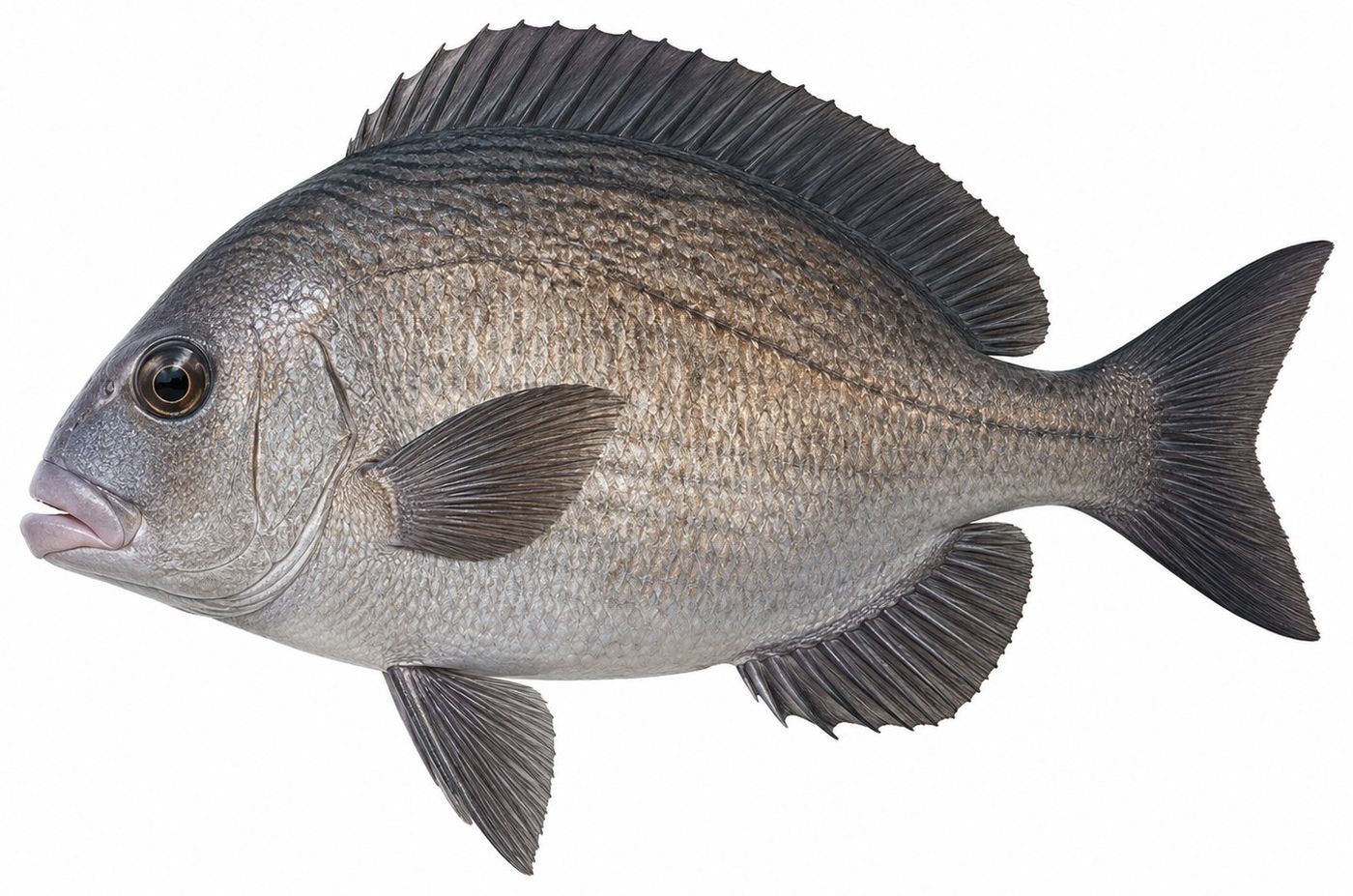
A large haemulid with a deep, compressed body, silvery grey to dark grey, sometimes with coppery reflections. Thick, fleshy lips, characteristic. Like the grunts, it produces sounds and has a chin pit. Even head profile, dark fins. Larger and deeper-bodied than the Pomadasys.
Features that never mislead
Thick, fleshy lips, the mark of the genus Plectorhinchus.
Deep, compressed body, silvery grey to dark grey.
Large size for a haemulid.
Chin pit and grunting sounds, like the grunts.
Size and weight
A large haemulid that can reach several decimetres. Precise maximum size to be confirmed on FishBase, in the order of 60 to 80 cm. Fine fish over Ivorian hard bottoms.
Behaviour and ecology
A demersal predator of coastal rocky and mixed bottoms, hunting crustaceans, molluscs and small fish near reliefs. Often in small groups near shelters.
Present in the Eastern Atlantic, from the Iberian coasts to West Africa. Sought after over the hard bottoms of the Ivorian coast. IUCN status: Least Concern.
Reproduction and season
Coastal spawning, pelagic eggs and larvae. Local spawning data to be documented.
Fishing practice
Techniques, from most to least effective
Bottom fishing with natural bait near rocks and drop-offs.
Vertical handline fishing over reliefs.
With a soft lure close to the bottom near shelters.
The fight: solid and stubborn, the rubberlip grunt heads for the bottom and the rocks. Keep in contact and tire it by pumping to draw it away from the reliefs.
Eating quality
White, firm and appreciated flesh. Excellent braised, grilled or in sauce. A fish of good value on the markets, prized by rock-fishing enthusiasts.
Sources: FishBase (Plectorhinchus mediterraneus, Guichenot 1850); IUCN Red List, LC; FAO Eastern Central Atlantic; Ouattara et al. 2016.