Tackle, knots and baits
The right tackle is not the most expensive: it is the one that suits your fishing, survives the tropical climate, and that you can repair at the water’s edge. This part equips the reader in four chapters: choosing, tying, baiting, maintaining.
Chapter 1: Choosing your tackle for Ivorian waters
The principle: three outfits cover everything
There is no need to own ten rods. Three well-chosen outfits cover almost all the fishing in this book. The light outfit: 2.4 to 2.7 metre rod, casting weight 10 to 40 grams, 2500 to 4000 reel, for the lagoon, shore casting and the pirogue. The heavy shore outfit: surf or jetty rod, 6000 to 8000 reel, for surfcasting and the jetty. The sea outfit: short, powerful rod, sturdy size 8000+ reel or conventional reel, for deep handlining, jigging and trolling. Beginners start with the first; enthusiasts end up with all three.
Braid or nylon?
Nylon is forgiving: stretchy, cheap, discreet, it absorbs head shakes and drag mistakes. Braid transmits: thin, with no stretch, it gives more distance, contact and spool capacity, but requires a leader and a well-set drag. A practical rule for our waters: nylon for beginners and for static bait fishing, braid for lures, jigging and deep handlining. In all cases, the tropical sun ages nylon quickly: check it often and replace it without hesitation.
Terminal tackle
Ivorian fish are won at the end of the line. Fluorocarbon leader of 0.40 to 1.00 mm depending on the target, flexible wire as soon as barracudas and Spanish mackerels are prowling, quality snap swivels (cheap ones open up on a serious fish), strong-wire hooks: corrosion and local jaws eliminate thin hooks within a season. Buy consumables in duplicate: the second set waits in the bag.
Buy local, buy smart
Abidjan’s fishing shops improve every year, and the second-hand market among expatriates and club members is active. For large specialised tackle (sealed reels, jigging rods), many top up while travelling or online. The rule for lasting savings: put the budget into the reel and consumables, the rod is more forgiving. An average reel dies in one season of sea spray; a good reel rinsed after every trip lasts ten years.
Chapter 2: The only six knots you need
Six knots cover every situation in this book. Learn them at home, with clean hands and in peace: at the water’s edge, in the wind, by headlamp, you only succeed with the knots you know by heart. Universal rule: always wet the knot before tightening, as friction heat kills nylon.
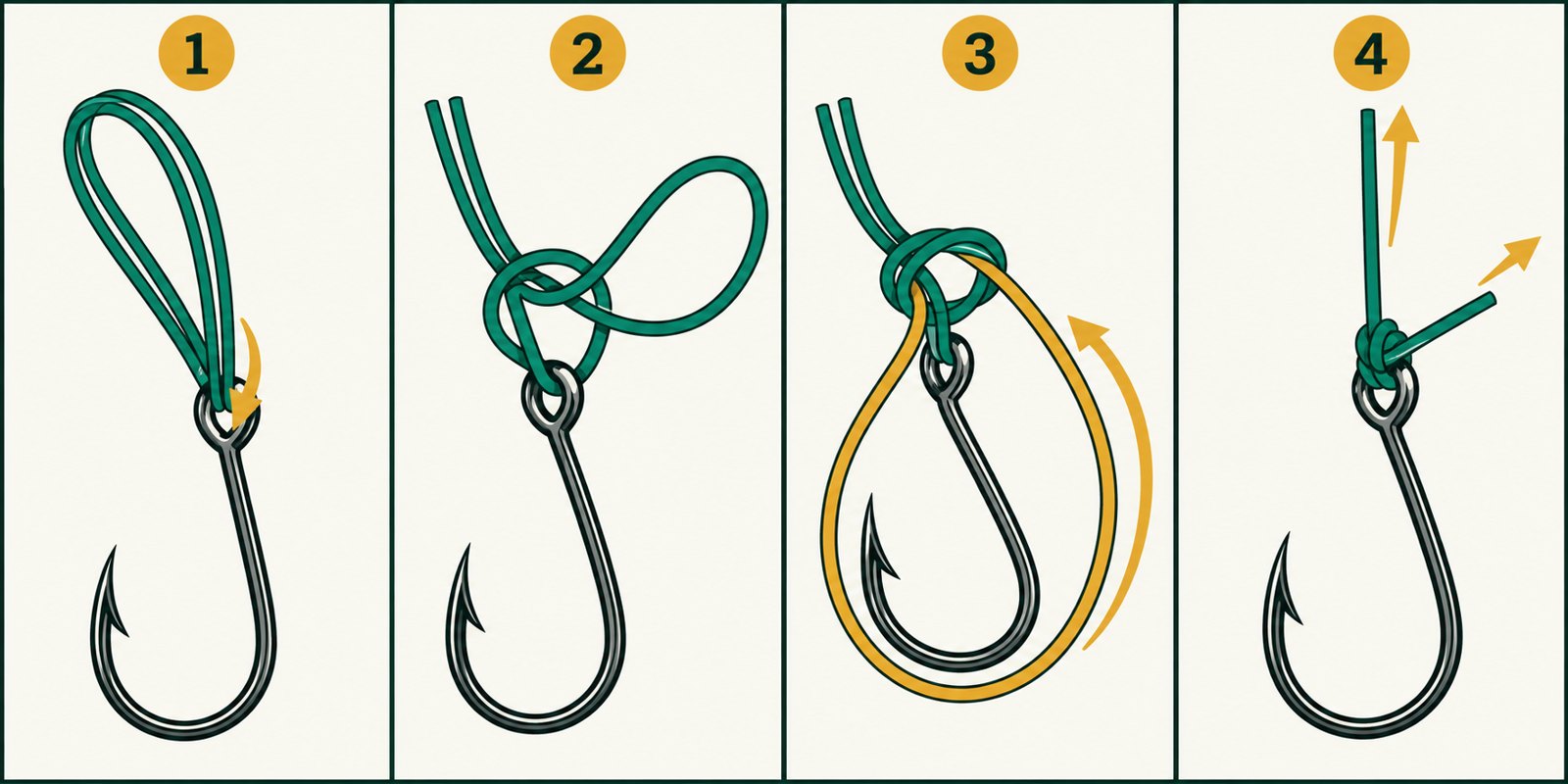
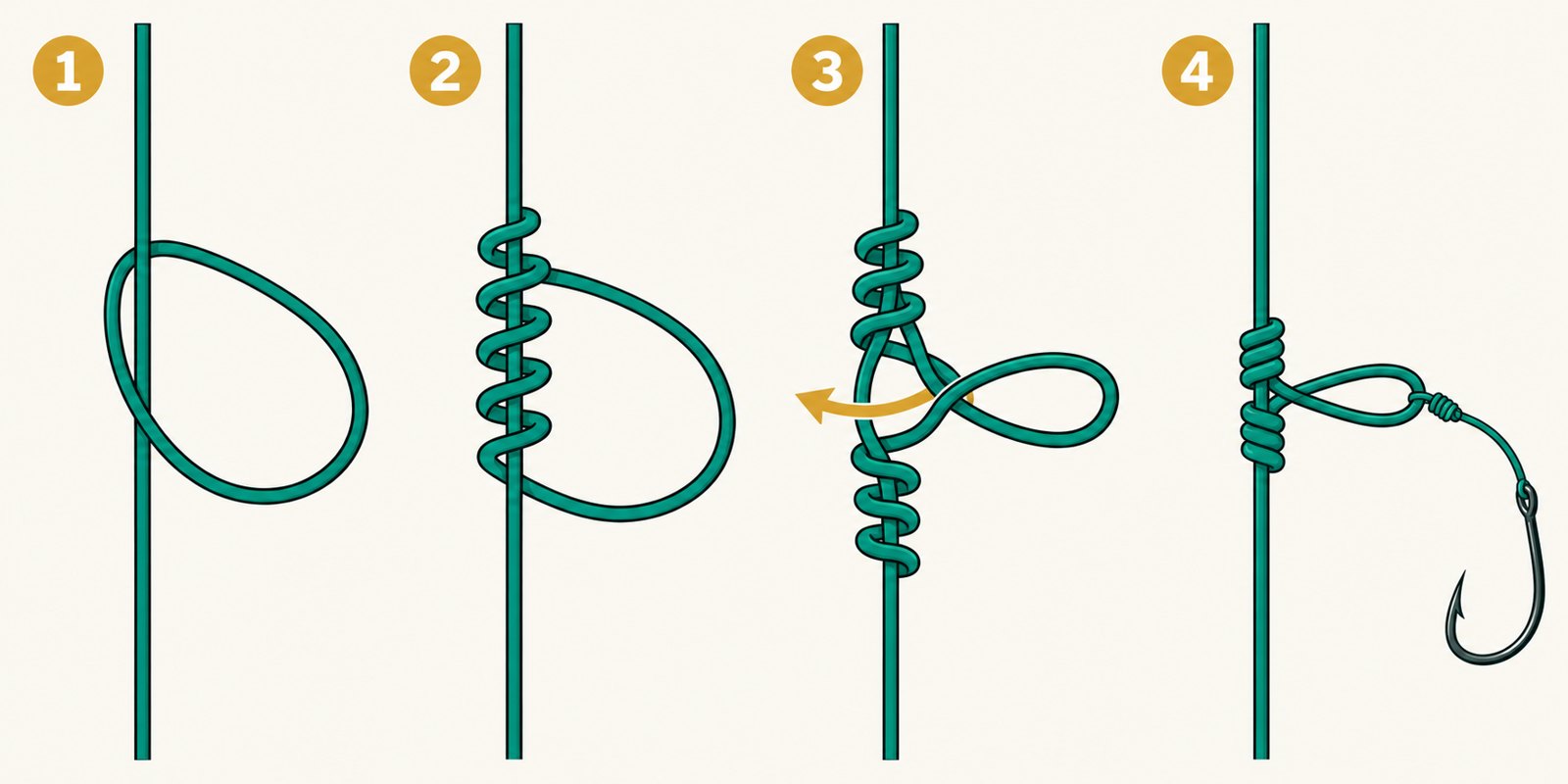
1. The Palomar knot: tying on a hook or lure
The most reliable of the attachment knots, and one of the simplest. Double the line, pass the loop through the eye, tie a loose overhand knot, pass the hook through the loop, wet, tighten. Strength close to 100% of the line, including with braid.
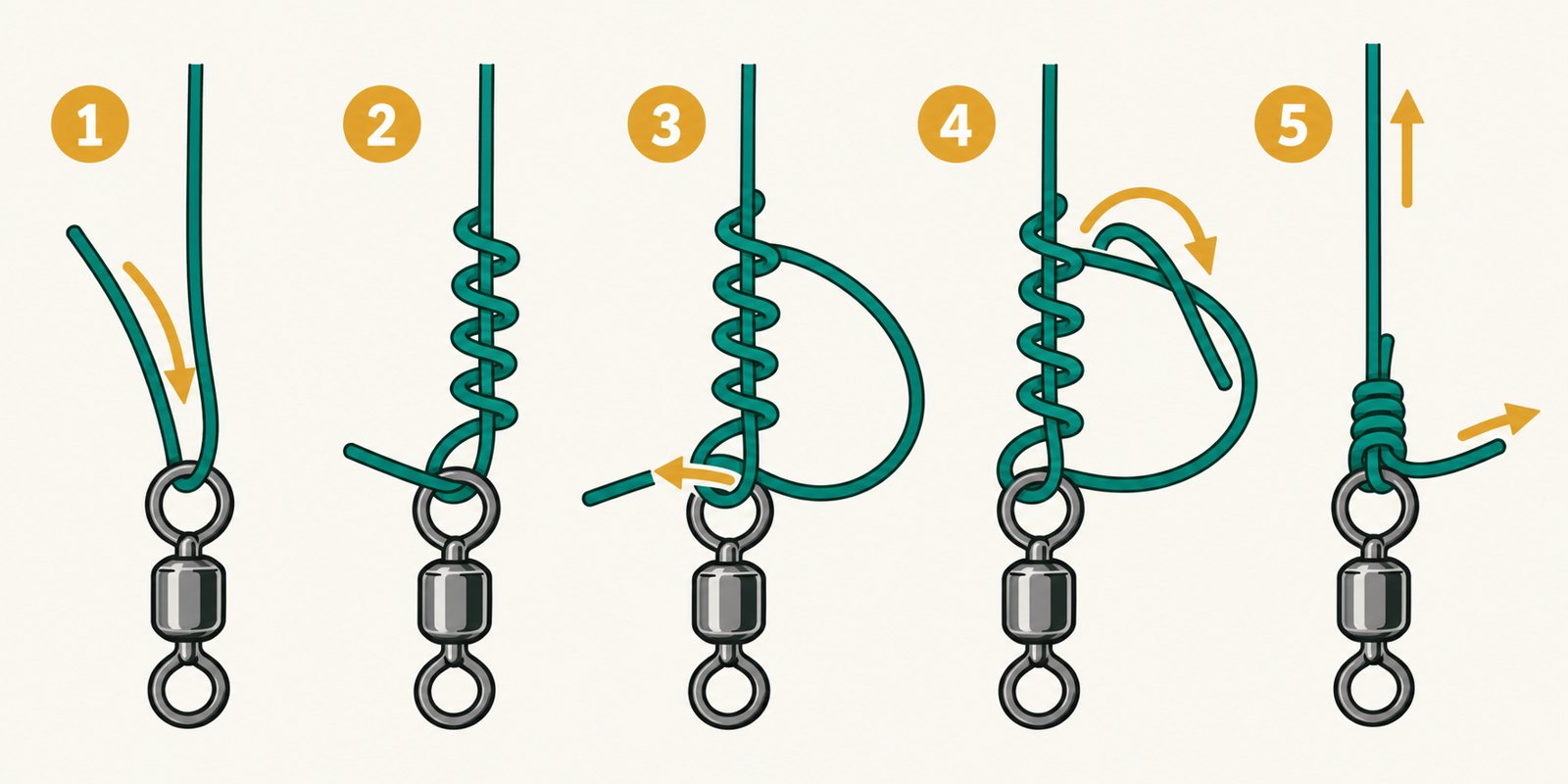
2. The improved clinch knot: the quick attachment
Five turns around the standing line, back through the first loop then through the big loop, wet, tighten. Fast, known to everyone, perfect with nylon up to 0.50 mm. Above that, prefer the Palomar or a loop-to-loop connection.
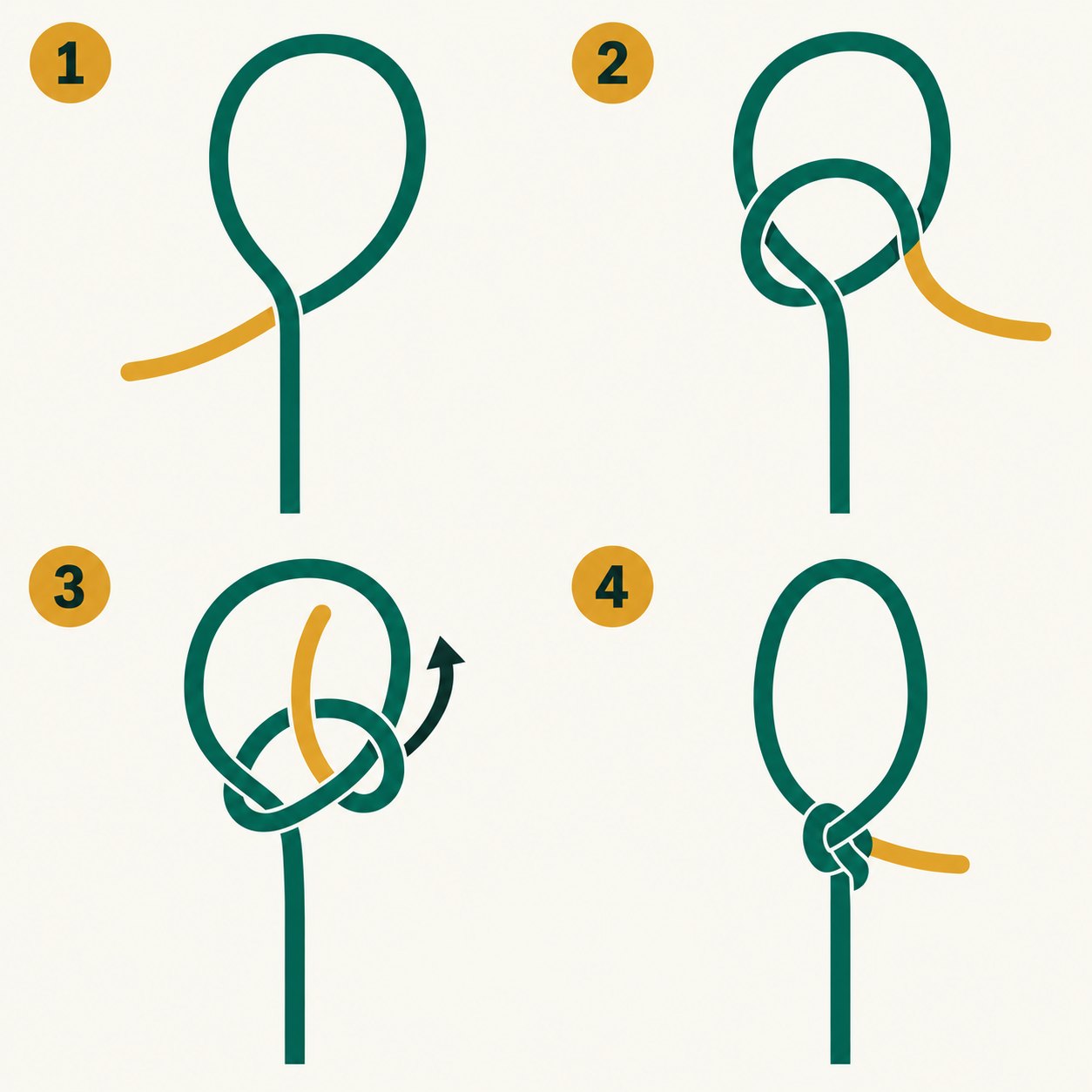
3. The perfect loop: rigs and swivels
The loop everything clips onto: swivel, sinker, pre-tied rig. An overhand knot, the tag end comes back along the line, a final loop locks it all. Also used to prepare leaders at home, ready to loop on at the water’s edge.
4. The dropper loop knot: the handline
The knot that holds a dropper perpendicular to the main line, without twisting: essential for handlining and two-hook surfcasting. Make a large loop in the line, twist the loop on itself six to eight times, pass the loop through the central hole, tighten: the dropper stands out by itself.
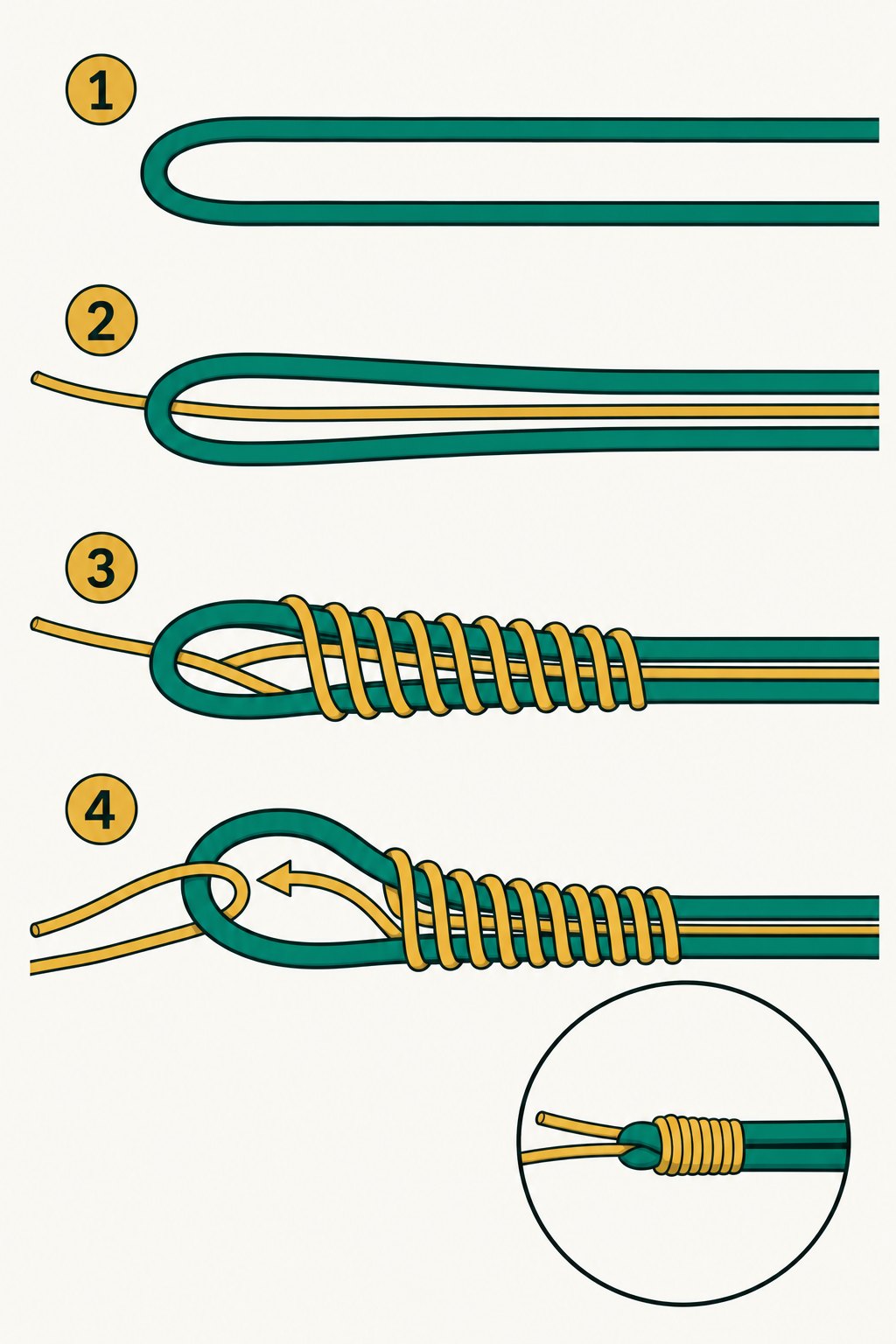
5. The Albright knot: joining braid and fluorocarbon
The connection of modern fishing: thin braid joins the thick leader. A loop in the fluorocarbon, the braid goes in, ten tight turns working back, back through the loop, wet, tighten gradually. Slides well through the guides if tied carefully.
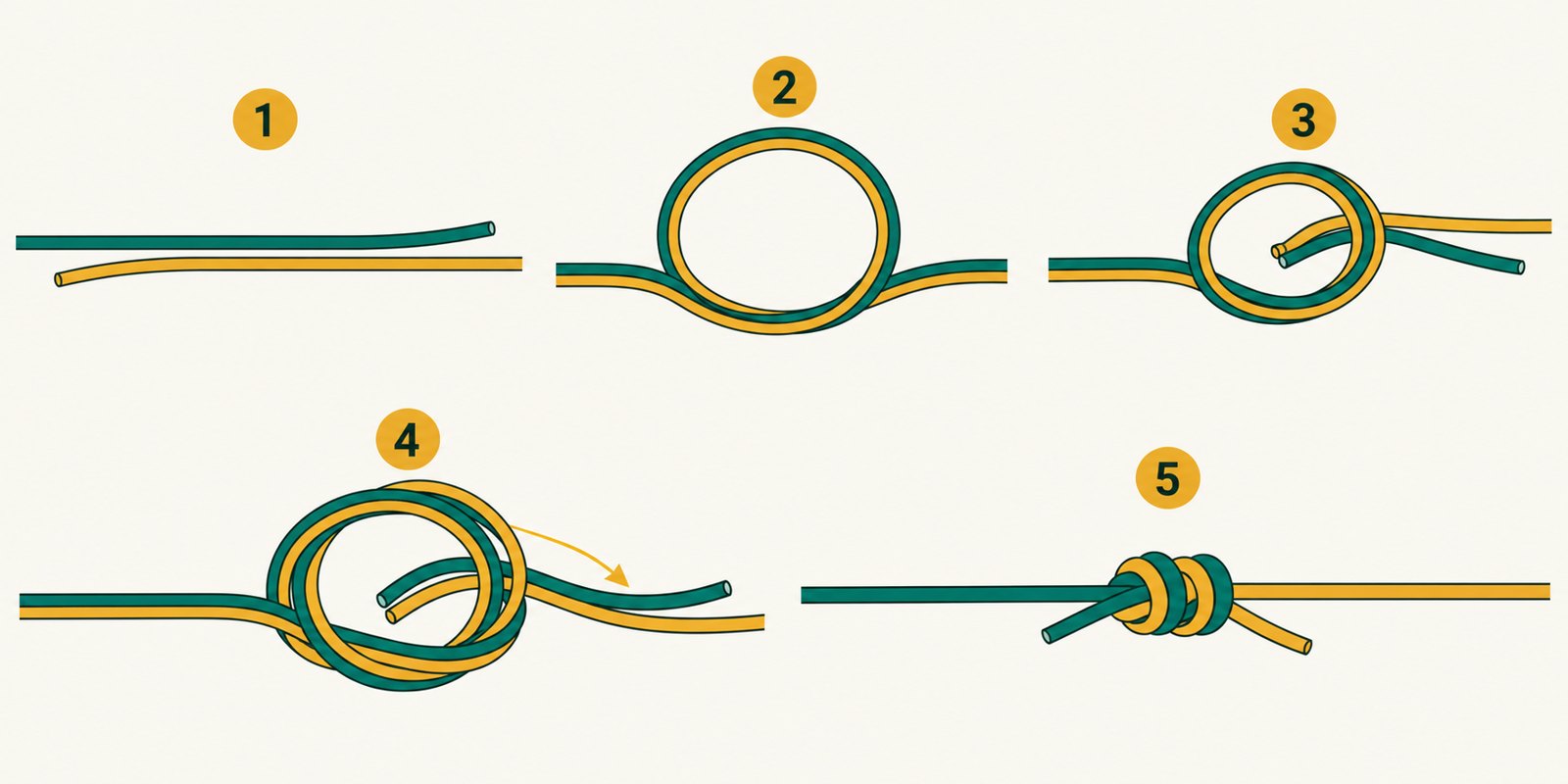
6. The surgeon’s knot: the universal fix
Two lines side by side, two overhand knots tied together, wet, tighten. The least elegant and the most useful: it joins two nylons in thirty seconds, by headlamp, in the rain. Every angler has blessed it one day.
Chapter 3: Baits and groundbaits of the Gulf of Guinea
The best Ivorian bait does not come off a shop shelf: it comes from the beach, the lagoon or the market. This chapter lists the reliable choices, where to find them, how to keep them, how to put them on the hook.
Baits from the beach and the lagoon
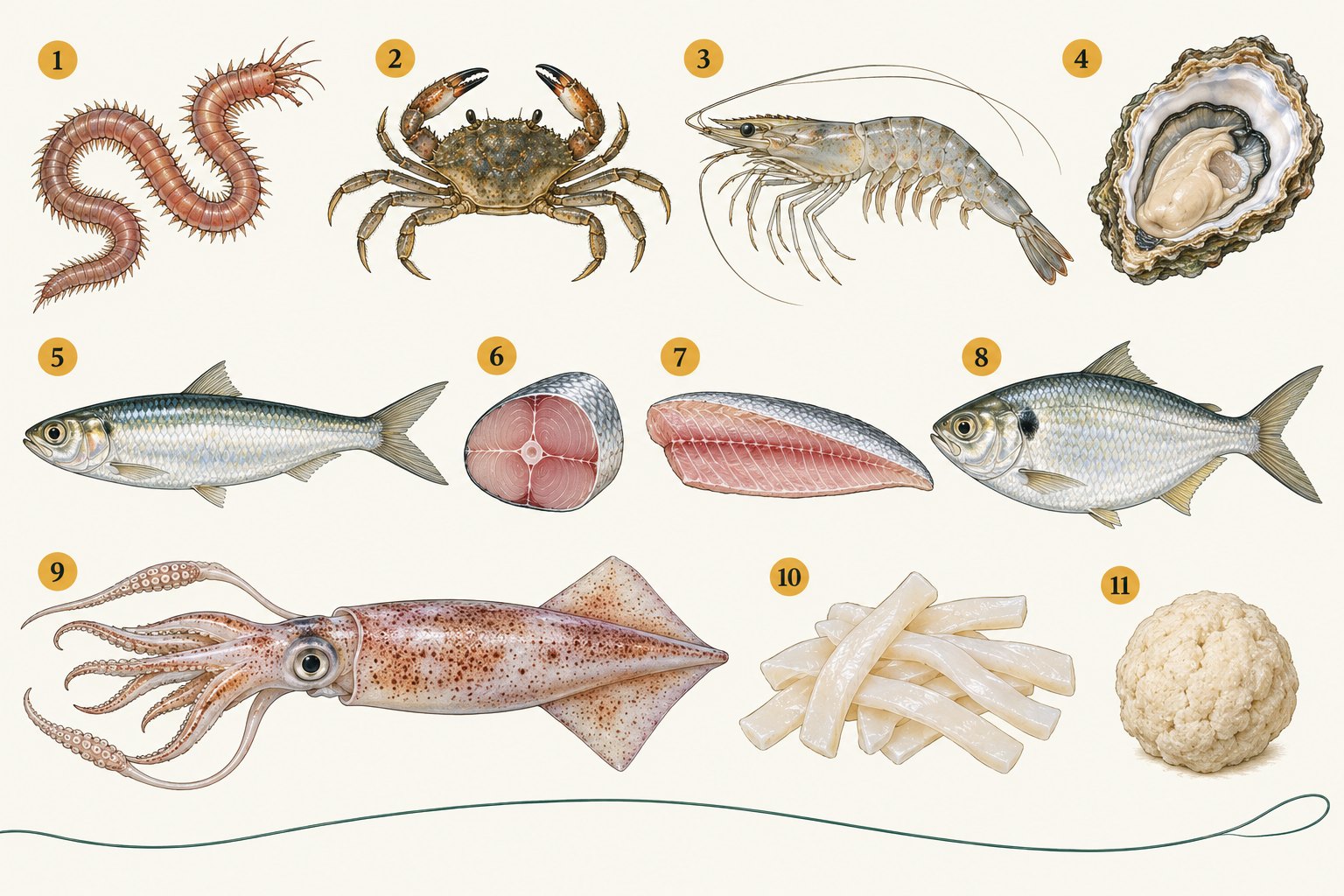
Marine worms are dug at low tide on sandy and muddy flats: look for the sand casts, dig fast. The universal surfcasting bait, fragile, to be threaded accordion-style on a fine-wire hook. Small crabs from the beaches and mangrove, tough on the cast and irresistible to Grogneur sompat (Sompat grunt), grunts and threadfins: caught by hand at dusk, they are kept alive in a bucket of damp sand. Lagoon shrimps, bought live from fishers or sieved along the edges: whole and live for good fish, peeled for finesse fishing. Finally, mangrove oysters, prised from the mangrove roots: soft flesh to be secured well, deadly on lagoon bottom fish.
Baits from the market
The fish market is the best bait shop in the country. Fresh sardinella is sold by the pile: whole as live bait or dead bait for big predators, in chunks for handlining, in fillets for the surf. Bonga shad replaces it in the lagoon. Squid stays on the hook like no other bait: strips for the bottom, heads for snappers. Only one criterion: freshness, clear eyes and firm flesh, and the cool box starts at the market, not at the boat.
Live bait
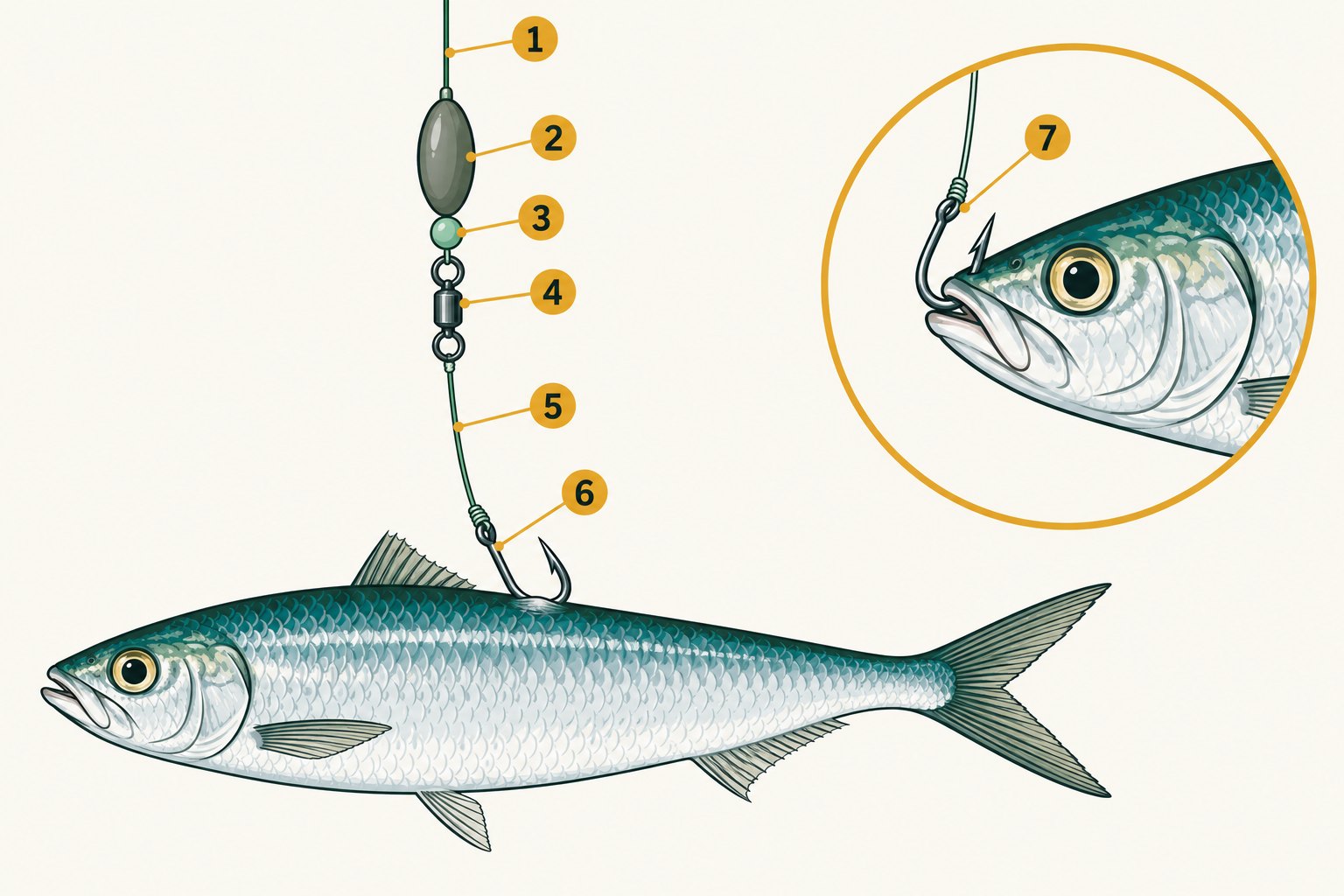
Live bait is the king of baits for big predators: sardinella or bonga shad hooked under the dorsal fin or through the nose, on a sliding rig that lets it swim. Catch your live baits with a landing net or fine line early in the morning, keep them in an aerated live well or a bucket whose water is changed often: a sluggish live bait is a dead bait. Barracudas, jacks, threadfins and groupers cannot resist it.
Groundbait and chum
Lagoon groundbaiting remains homemade and effective: shrimp scraps, crushed sardinella heads, wheat bran or oilseed cake from the market, mixed with mud from the spot. At sea, chum works wonders to hold fish under the boat: ground sardinellas thrown in regular handfuls, never in bulk. The rule is the same everywhere: bait a little, bait often, and stop as soon as the fish are there.
Chapter 4: Surviving the climate, tropical maintenance
Ivorian salt, heat and humidity kill tackle more surely than fish do. The remedy is a ten-minute routine: rinse in fresh water after every sea trip, reels with the drag loosened, rods including the guides; dry in the shade, never in direct sun; lightly grease shafts and snaps once a month; store in a ventilated place, rods upright or hung, away from damp rod bags that breed rust.
Hooks and lures live in compartment boxes with a desiccant sachet; a rust-spotted hook gets thrown away, it will break. Nylon is stored in the dark: a spool forgotten on a sunny shelf loses its strength within a few months. Before each trip, two thirty-second checks: the reel drag (it must slip smoothly) and the last metre of line (run it between two fingers and cut off the slightest roughness).
The basic bag, whatever the trip
Beyond the technique-specific checklists given in Part III, a basic kit never leaves the Ivorian angler: multi-tool pliers and scissors, spare leaders and hooks, knife, headlamp and batteries, sunscreen and hat, drinking water, waterproof pouch for phone and papers, small first-aid kit (disinfectant, plasters, tweezers for scorpionfish spines), and a bag to bring back all your waste. It all fits in five litres.