
Common torpedo (ocellate torpedo)
Torpedo torpedo (Linnaeus, 1758)
Family Torpedinidae • the electric ray with blue eyespots
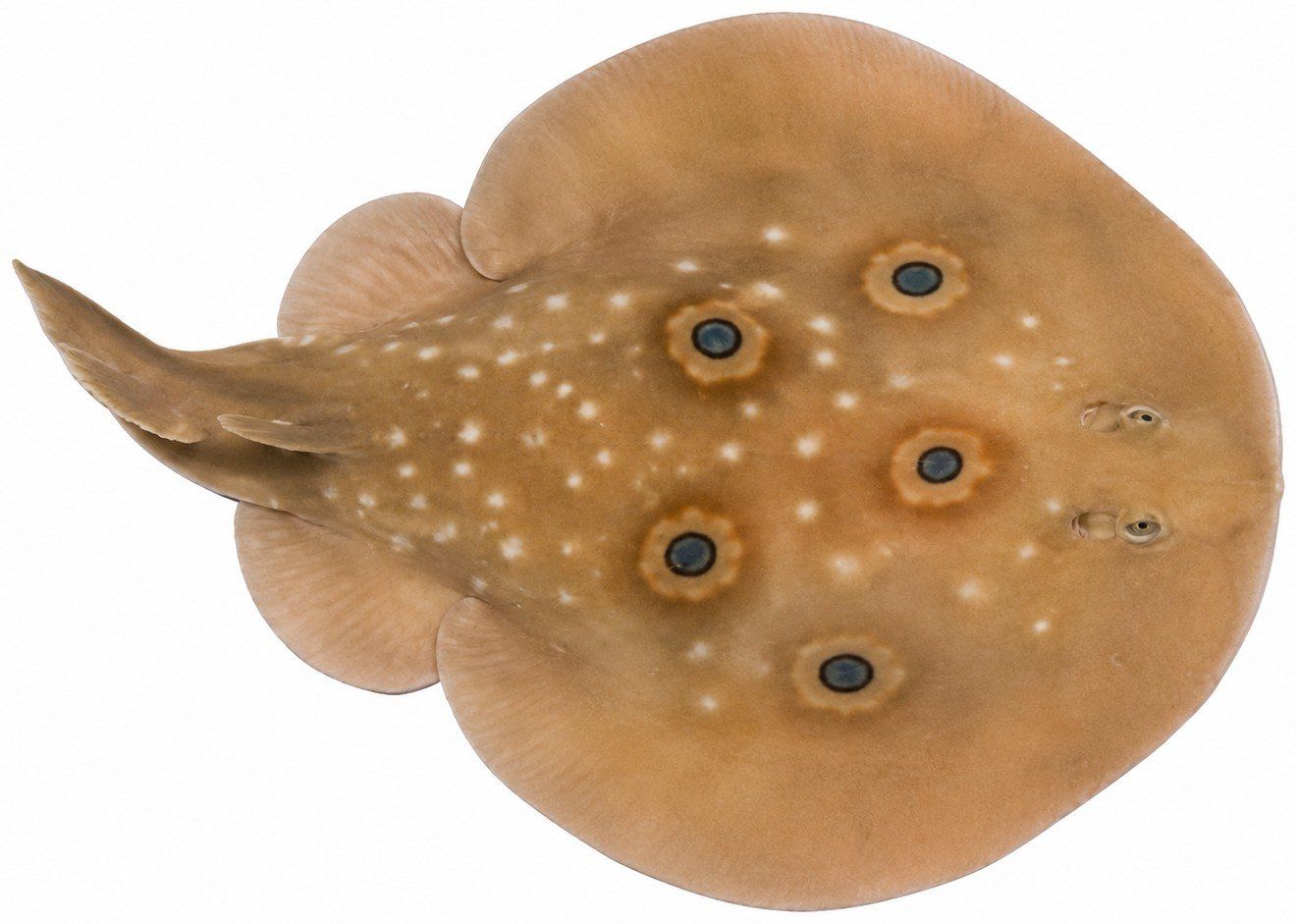
| French name | Raie torpille ocellée, torpille |
|---|---|
| Scientific name | Torpedo torpedo (Linnaeus, 1758) |
| Family | Family Torpedinidae |
| English name (FAO) | Common torpedo (ocellate torpedo) |
| Local names | Torpedo ray, torpedo. In Côte d’Ivoire: “Requin couverture” (Ouattara et al., 2016) |
| Habitat | Coastal marine, sandy and muddy bottoms, shallow depths; demersal. |
| IUCN status | LC Least Concern. |
Identification
A ray with an almost circular, thick and soft disc, reddish-brown above, usually bearing five characteristic ringed blue spots (eyespots). Short, fleshy tail with a small tail fin. It produces strong electric shocks using organs located on either side of the head.
Features that never mislead
Rounded, thick and soft disc; short tail with a distinct tail fin.
Usually five blue eyespots ringed with dark on the back (signature).
No sting; smooth, naked skin.
Produces a powerful electric shock (defence and prey capture).
Size and weight
Disc width usually 20 to 40 cm; total length up to about 60 cm.
Behaviour and ecology
An ambush predator of sandy bottoms: buried, it stuns fish and invertebrates with an electric shock before swallowing them. Slow and nocturnal, it stays on shallow coastal bottoms.
Reproduction and season
Aplacental viviparous; litters of fully formed young, already able to produce small shocks from birth.
Fishing practice
Techniques, from most to least effective
Often an accidental catch when surfcasting with bottom bait or in coastal nets.
With a bottom line over sandy areas (the top technique when it is targeted, which is rare).
Never handle it with bare hands.
WARNING: the torpedo delivers a real and powerful electric shock when caught. Never grab it with bare hands: use unhooking pliers and gloves, or cut the line close to the mouth. A sluggish fight but a serious electrical risk; place the animal on an insulating surface before releasing it.
Eating quality
Little sought after for the table (soft flesh); most often released. Of interest mainly for identification and naturalist curiosity.
Sources: FishBase (Torpedo torpedo, Linnaeus 1758); IUCN Red List (Least Concern); studies on the rays of Côte d'Ivoire. Local names to be documented.